Lone Peak Power Plate Wiring Diagram

Overview
The Lone Peak Power Plate is a streamlined camper power system that combines charging, battery management, and 120V power output into one bulkhead-mounted package. It is designed to work with a secondary battery in your Lone Peak camper and help keep your power system charged and ready for camping, overlanding, road trips, and everyday adventure use.
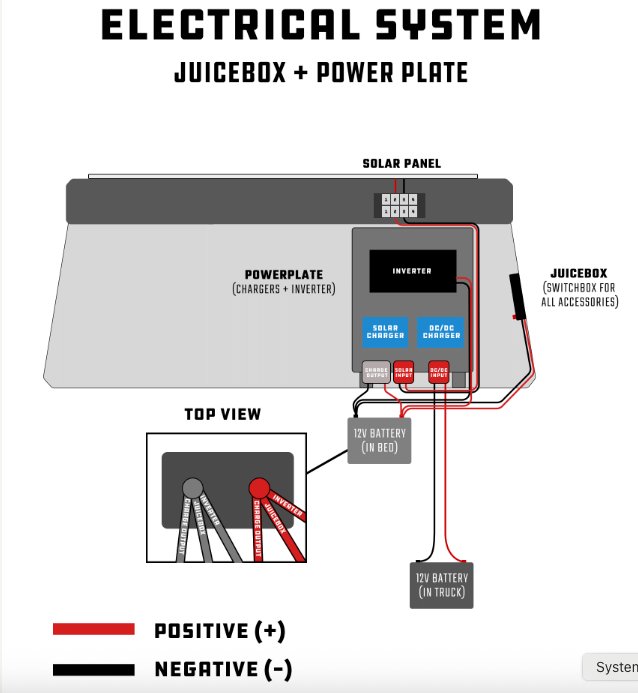
This post is designed to help owners understand the Power Plate wiring diagram, power flow, major components, and how the system connects to solar, DC/DC charging, the Juicebox, and a secondary camper battery.
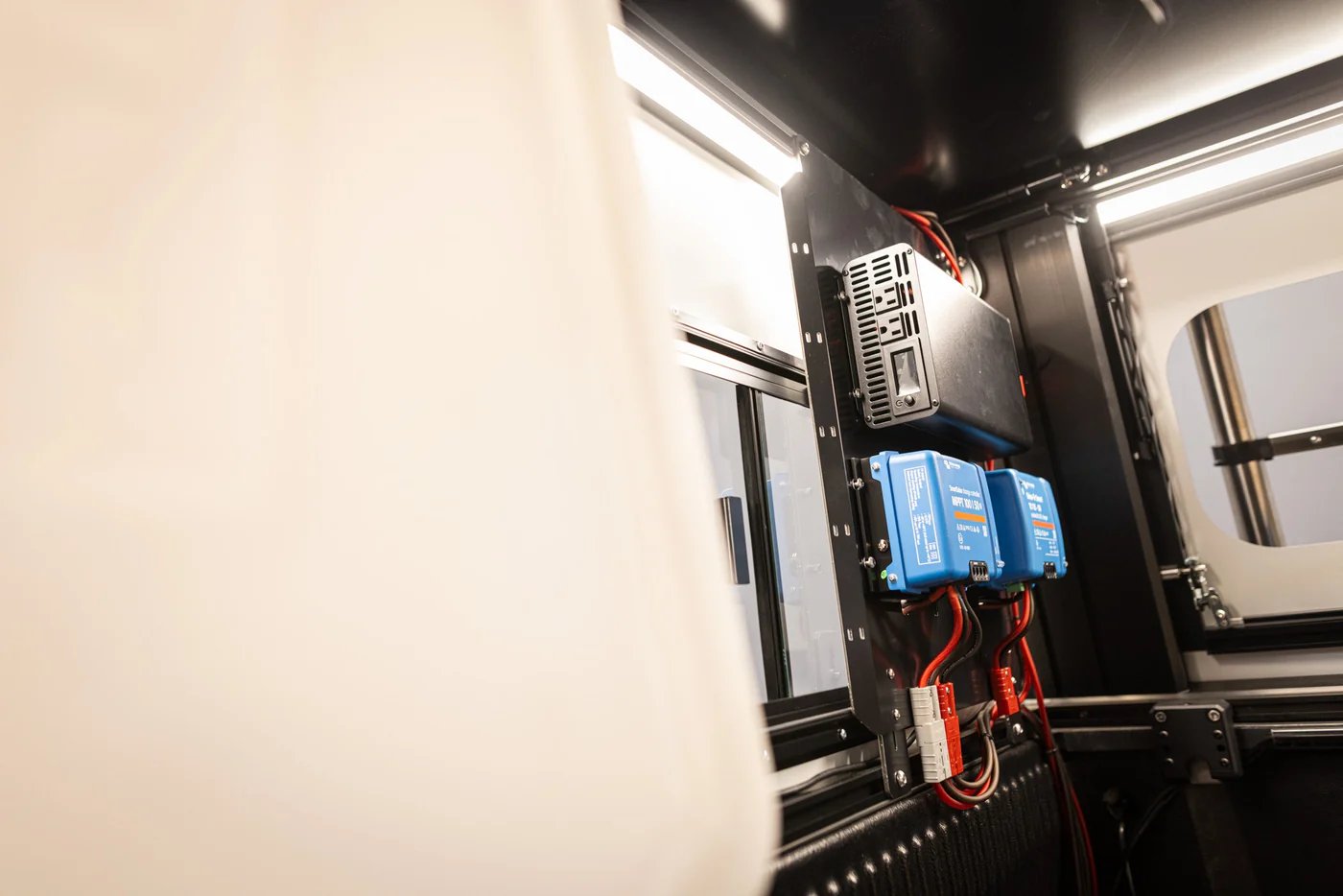
What the Power Plate Does
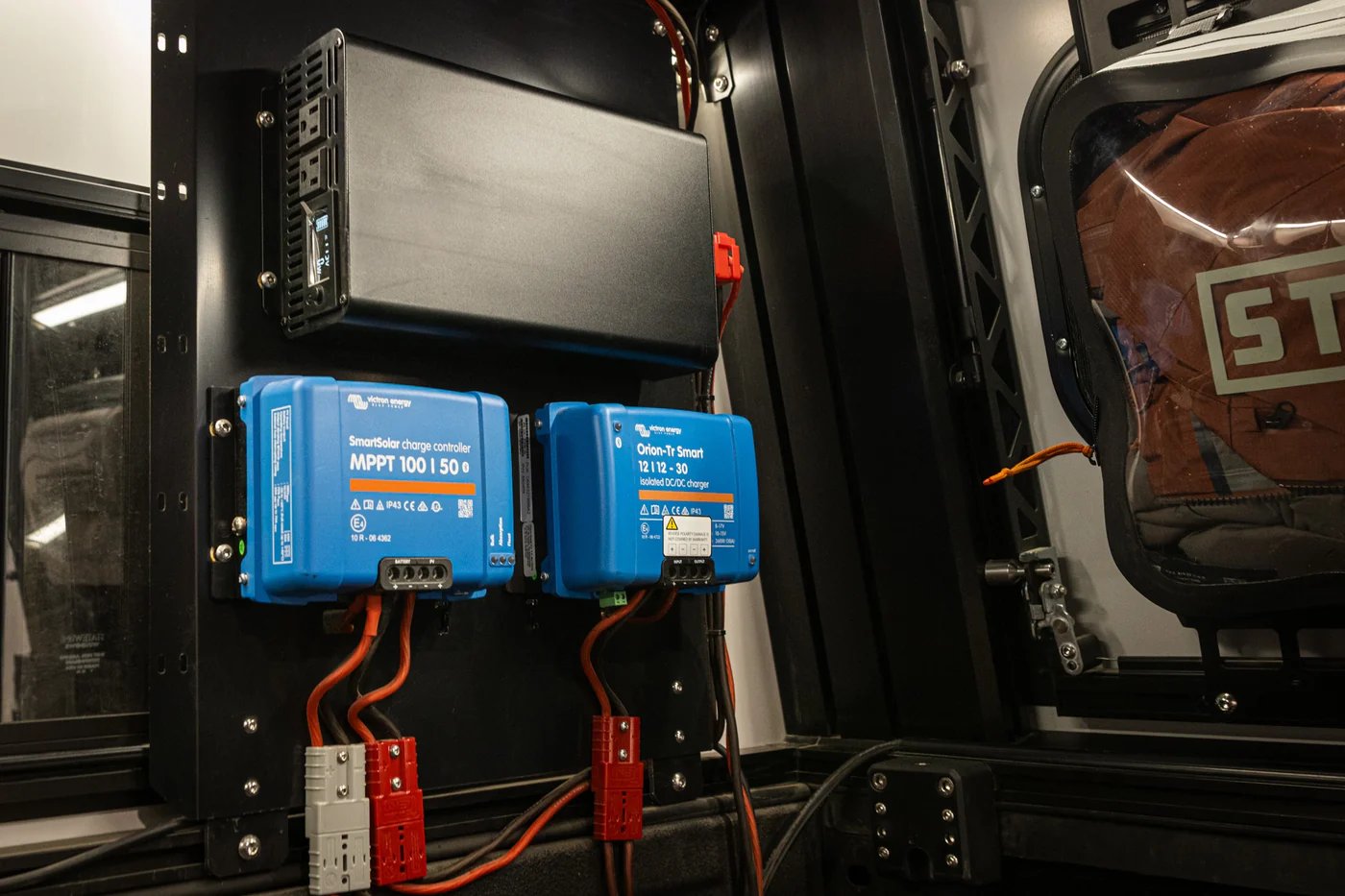
The Power Plate combines three key power components into one clean setup:
50A solar charging
30A DC/DC charging
1000W inverter
Together, these components help manage power coming into your camper battery and provide usable power for your camper accessories and gear.
The Power Plate mounts to the bulkhead of your Lone Peak Camper, keeping the major electrical components organized in one location. From there, it connects to your secondary battery, selected power options, and compatible camper electrical systems.
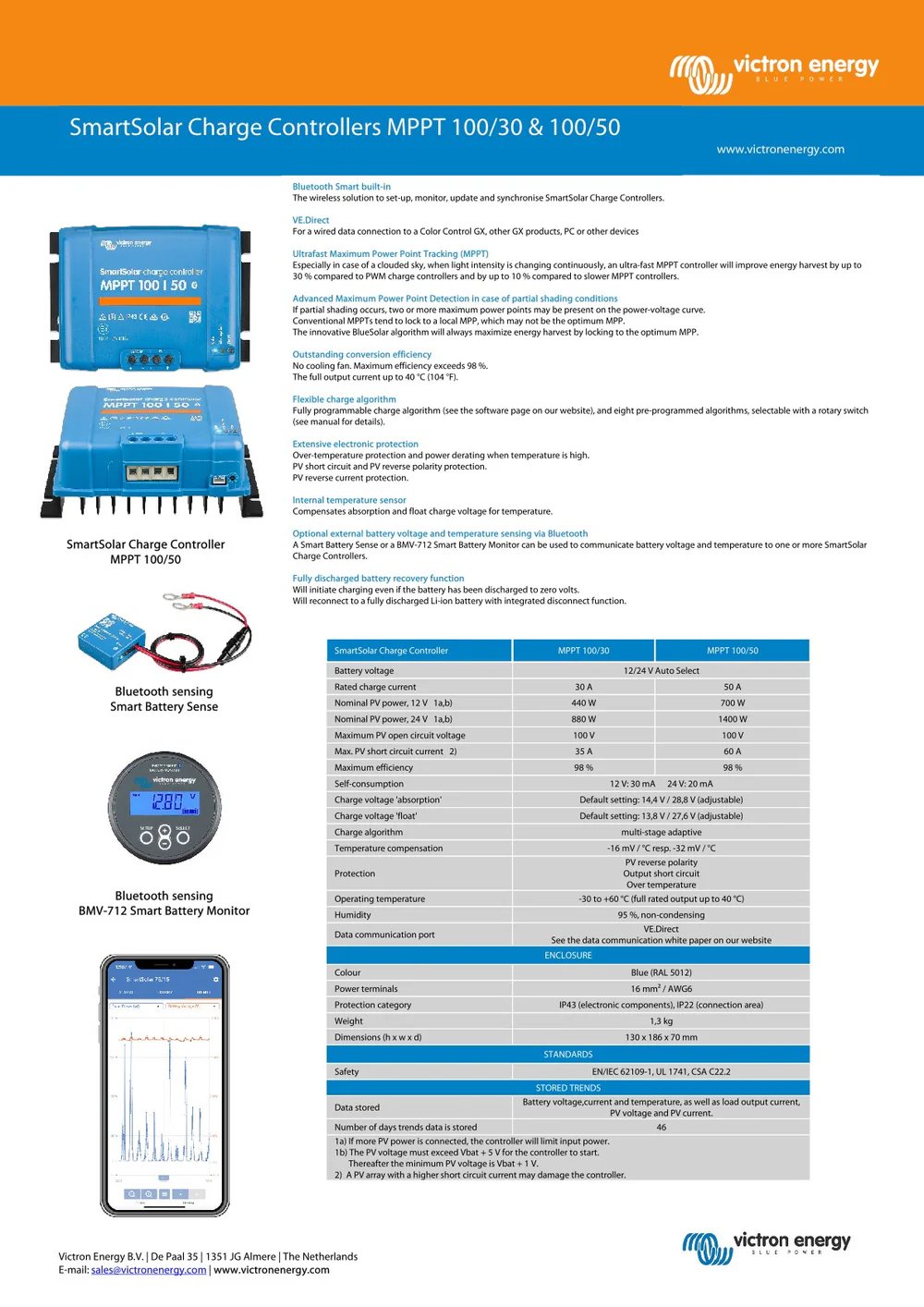
Solar Charging
The Power Plate includes a Victron 50A solar charger that accepts solar panel input up to 100V. This allows compatible solar panels to help recharge your secondary camper battery while you are parked, camping, or spending time off-grid.
When solar is connected, the Power Plate routes that solar input through the charge controller and into your secondary battery, helping maintain battery power for your camper setup.
DC/DC Charging
The Power Plate also includes a 30A DC/DC charger designed to charge your secondary camper battery from your truck’s electrical system while driving.
This allows your truck to help recharge your camper battery when the engine is running, making it a useful option for longer trips, daily driving, and overland travel where you may be moving between campsites.
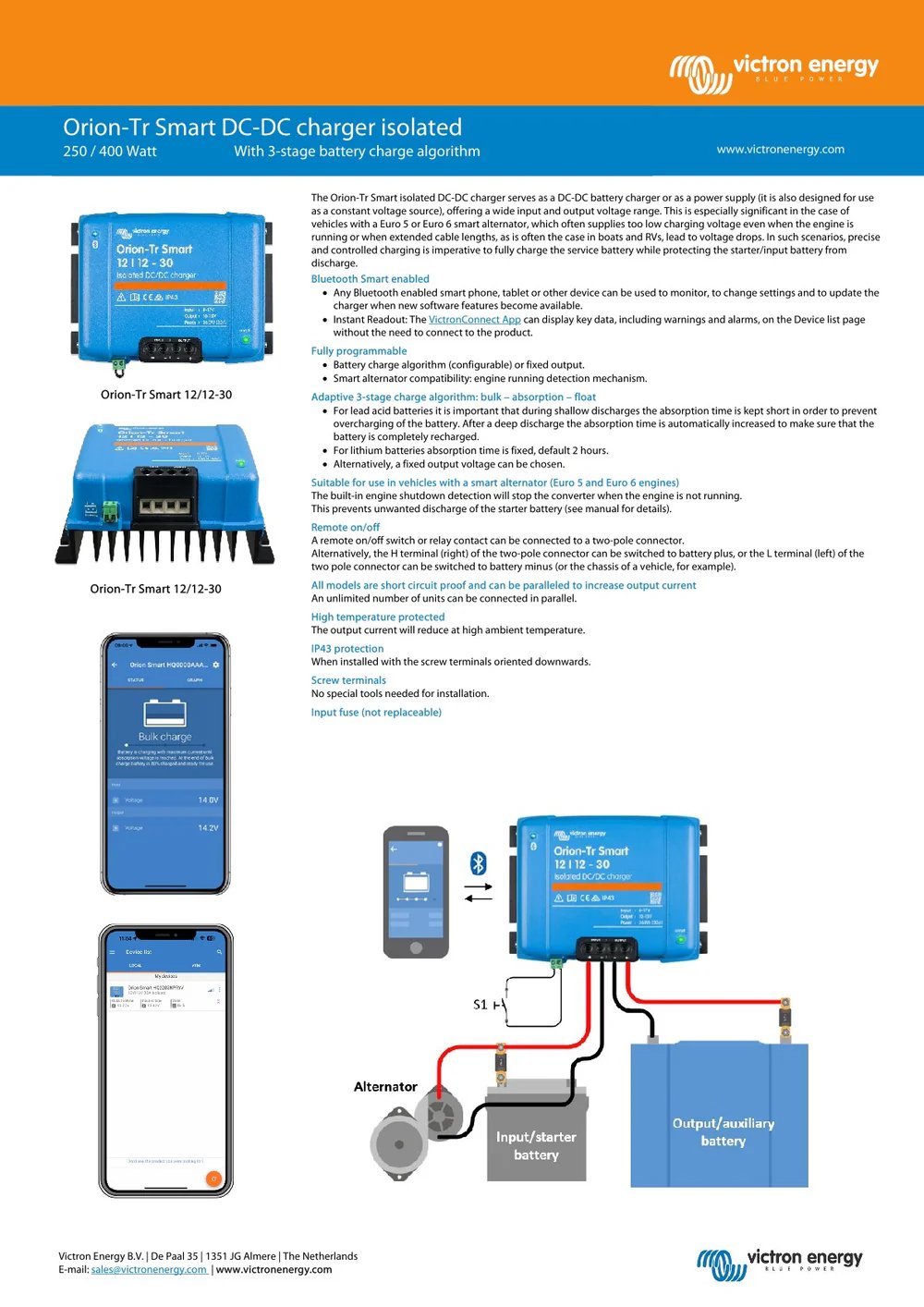
Note: The DC/DC connection to your truck is not included. If you want your secondary battery to charge from your vehicle while driving, that connection will need to be completed separately.
Our team will connect all other selected power options during initial production.
1000W Inverter
The Power Plate includes a 1000W inverter that provides 120V AC power from your secondary battery. The inverter includes two 120V AC plugs, giving you the ability to power or charge compatible household-style devices while using your camper.
The inverter also includes a readout that shows battery voltage and power draw, making it easier to monitor how much power you are using.
When powered on with no load, the inverter draws about 8 watts. Because of that small standby draw, the inverter includes a switch so it can be turned off when it is not in use.
Secondary Battery Connection
The Power Plate is designed to connect to a secondary battery, not replace one. The solar charger and DC/DC charger both output to the camper battery so your power source stays charged and ready to use.
A secondary battery is strongly recommended for powering camper accessories because it keeps your camper electrical system separate from your truck’s starting battery. This helps support longer accessory use while camping and reduces the chance of draining the battery needed to start your vehicle.
See our recommended battery: 105Ah LiFeP04 Battery
Power Plate and Juicebox System
In a Lone Peak camper electrical setup, the Power Plate and Juicebox serve different roles.
The Power Plate manages charging and 120V power. It handles solar input, DC/DC charging, inverter power, and battery charging.
The Juicebox is the switchbox/control hub for camper accessories. It controls connected 12V accessories such as lights, fans, heaters, chargers, and other compatible add-ons.
When used together, the Power Plate helps keep the secondary battery charged, while the Juicebox distributes and controls accessory power inside the camper.
For more information on the Juicebox: Thread - Juicebox
Wiring Diagram Overview
The Power Plate wiring diagram shows how power flows through the camper electrical system.
Typical connections include:
Solar panel input to the solar charger
DC/DC charger connection for vehicle charging
Output to the secondary 12V battery
Inverter connection for 120V AC power
Power routing to the Juicebox for camper accessories
The diagram also identifies positive and negative wiring, helping owners better understand how the Power Plate, Juicebox, battery, solar, and truck charging systems relate to each other.
Important Installation Notes
The Power Plate is designed as a clean, production-installed power solution for Lone Peak campers.
During initial production, our team will connect the power options selected for your camper. However, the DC/DC connection to your truck is not included and must be completed separately if you want the system to charge from your vehicle while driving.
As with any 12V electrical system, make sure all DIY additions, battery connections, solar connections, and aftermarket power upgrades are properly fused, correctly sized, and installed safely.
Why Add the Power Plate?
The Power Plate is a great option for owners who want a more complete camper power system without piecing together separate components on their own. By combining a Victron 50A solar charger, 30A DC/DC charger, and 1000W inverter, it gives your Lone Peak camper a more capable electrical foundation for off-grid camping, overland travel, and extended time outdoors.
Whether you are charging from solar, recharging while driving, or using 120V power at camp, the Power Plate helps keep your camper power system organized, accessible, and ready for adventure.
For more information: Lone Peak Overland Power Plate